What Qualifications Should I Look for in a Manchester Aesthetics Nurse? | Revitalised Aesthetics
Choosing an aesthetics nurse in Manchester? Learn which qualifications, registrations and clinical experience truly matter before booking any treatment.
What Qualifications Should I Look for in a Manchester Aesthetics Nurse?
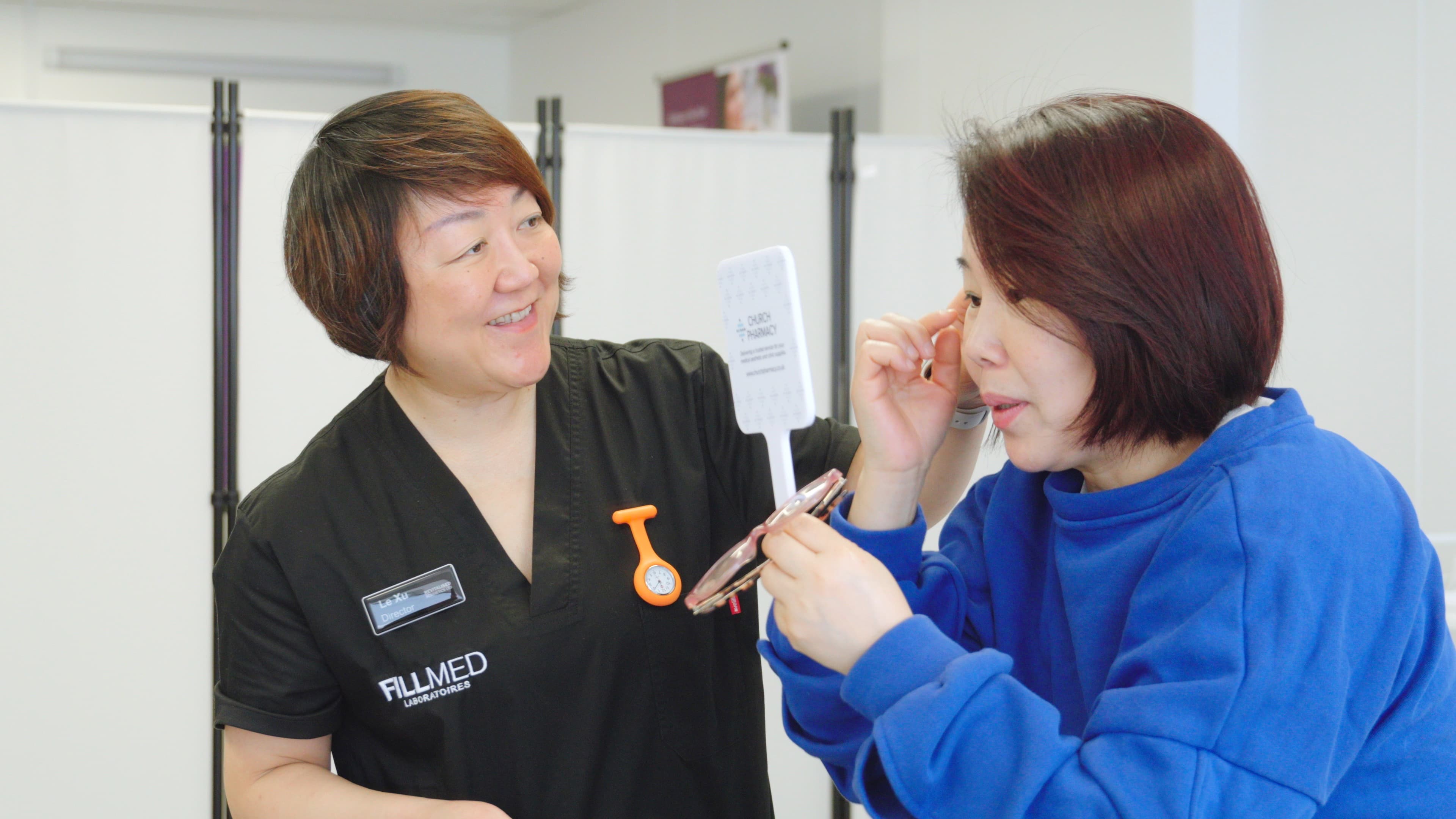
Choosing the right aesthetics nurse in Manchester is one of the most important decisions you will make before undergoing any cosmetic treatment. At Revitalised Aesthetics, clinic founder Le Xu holds a BSc (Hons) in Nursing, is a Senior Registered Nurse with over ten years of clinical experience, and is fully registered with the Nursing and Midwifery Council (NMC). Those credentials are not simply letters after a name — they represent the foundation of safe, medically grounded aesthetic practice. But what do they actually mean, and what should you be looking for when comparing practitioners across Manchester?
NMC Registration: The Non-Negotiable Starting Point
The Nursing and Midwifery Council is the UK's regulatory body for nurses and midwives. Any practitioner who calls themselves an aesthetics nurse should be actively registered on the NMC register, which you can verify online in seconds at nmc.org.uk. An NMC-registered nurse is bound by a professional Code of Conduct, meaning they must prioritise patient safety, maintain competence, and act with honesty and integrity at all times.
If a practitioner's NMC registration has lapsed, been suspended, or was never in place, you have no regulatory backstop if something goes wrong. In the current UK regulatory environment, aesthetic treatments such as dermal fillers and anti-wrinkle injections do not require a medical licence to administer — meaning virtually anyone can legally offer these services. NMC registration is therefore one of the clearest markers that separates a medically accountable nurse from an untrained practitioner.
A Degree-Level Nursing Qualification
Since 2013, all newly qualifying nurses in the UK have been required to hold a degree. A BSc (Hons) in Nursing confirms that the practitioner has completed a rigorous, university-level programme covering anatomy, physiology, pharmacology, clinical assessment and patient care. This is not a short course or a weekend workshop — it is a three-year minimum academic and clinical training programme.
In aesthetic practice, this matters more than most people realise. Treatments involving injectable products — whether botulinum toxin, hyaluronic acid dermal fillers or biostimulators — carry inherent clinical risks, including vascular occlusion, infection, nerve damage and allergic reaction. A nurse educated to degree level has the anatomy knowledge to understand where these risks arise, and the clinical training to recognise and manage them if they do.
Senior Clinical Experience Beyond Aesthetics
Years of clinical experience in healthcare settings — not just aesthetic clinics — is a quality marker that is easy to overlook but genuinely important. A nurse who has worked in acute care, surgical wards, or community health settings will have encountered real medical emergencies, administered a wide range of medications, and developed the calm, methodical decision-making that aesthetic practice demands when things do not go to plan.
Le Xu brings over a decade of clinical experience to every consultation at Revitalised Aesthetics. That background informs not just technical skill with a needle, but a broader clinical judgement — the ability to recognise a contraindication, take a thorough medical history, and know when not to treat is as important as knowing how to treat well.
Aesthetic-Specific Training and Ongoing Education
Beyond core nursing qualifications, a reputable aesthetics nurse should be able to demonstrate specific training in the treatments they offer. Reputable aesthetic training providers in the UK include those accredited by organisations such as the British Association of Cosmetic Nurses (BACN) and courses approved by recognised medical bodies. Look for evidence that your practitioner completes regular Continuing Professional Development (CPD) to keep their skills and knowledge current — the aesthetic medicine field evolves quickly, and best practice guidance is updated frequently.
Prescribing Rights and Medication Safety
Many of the most effective aesthetic treatments involve prescription-only medicines. Botulinum toxin, for example, is a Prescription Only Medicine (POM) in the UK. A nurse who is not a qualified independent prescriber must work under the supervision of an appropriately qualified prescriber or through a prescribing partner relationship. It is entirely reasonable to ask your practitioner how prescriptions are handled at their clinic, and a confident, transparent answer is itself a green flag.
The Philosophy Behind the Qualifications
Qualifications create the framework, but philosophy shapes the outcome. At Revitalised Aesthetics, the approach is built around medical precision and editorial restraint — the belief that aesthetic treatments should enhance your natural features without altering who you are. This anatomy-first philosophy is only possible because of the clinical depth behind it. Understanding facial anatomy at a graduate level means treatments can be placed with precision, avoiding critical structures and producing results that are refined rather than overdone.
That restraint is not a limitation — it is a product of genuine expertise. A practitioner who truly understands the face knows that less, placed correctly, consistently outperforms more, placed carelessly.
How to Verify a Practitioner's Credentials Before Booking
Before booking any aesthetic treatment in Manchester, take these practical steps. First, check the NMC register online to confirm registration is current and in good standing. Second, ask for the practitioner's full name and ask which nursing qualification they hold — a BSc (Hons) or equivalent degree-level registration is the benchmark. Third, ask how long they have worked in clinical healthcare, not just in aesthetics. Fourth, ask to see evidence of their aesthetic training credentials and any professional memberships such as BACN. Finally, ask about their approach to complications — a confident, clinical answer here is reassuring; evasiveness is not.
Good practitioners welcome these questions. The consultation process is your opportunity to assess not just credentials on paper, but the confidence, clarity and care with which a practitioner approaches your individual concerns.
Why This Matters More Than Ever in Manchester
Manchester has a thriving and competitive aesthetic market, with hundreds of practitioners offering everything from lip augmentation to full facial rejuvenation. That breadth of choice is positive, but it also means due diligence falls largely to the patient. The UK government has committed to tightening regulation of cosmetic procedures, and licensing requirements for certain treatments are expected to change — but until comprehensive legislation is fully implemented, qualifications and professional registration remain your most reliable guide.
At Revitalised Aesthetics, transparency is a core part of the patient experience. Le Xu's credentials are not background detail — they are the clinical foundation upon which every treatment, every recommendation and every safety decision is built. When you choose a Manchester aesthetics nurse, you deserve to know exactly who is treating you, what they are trained to do, and why that training matters to your safety and your results.
FAQ
Q: Is NMC registration mandatory for aesthetics nurses in the UK?
A: NMC registration is not legally required to administer aesthetic treatments in the current UK regulatory landscape, but it is the clearest mark of professional accountability. An NMC-registered nurse is bound by a Code of Conduct and can face regulatory consequences for unsafe practice — providing patients with meaningful protection that unregistered practitioners cannot offer.
Q: What is the difference between a nurse with a BSc and one who has done a short aesthetic course?
A: A BSc (Hons) in Nursing covers anatomy, physiology, pharmacology and clinical assessment over a minimum three-year programme. A short aesthetic course teaches specific techniques but not the underpinning clinical knowledge. For safe injectable treatments, understanding anatomy and being able to manage complications depends on the depth of training a full nursing degree provides.
Q: Can I verify a nurse's qualifications before booking in Manchester?
A: Yes. You can check NMC registration at nmc.org.uk using the practitioner's name or PIN. You should also ask directly for their nursing qualification, years of clinical experience, and aesthetic training certificates. A trustworthy practitioner will share this information willingly and clearly during an initial consultation or enquiry.
Q: Why does clinical experience outside aesthetics matter?
A: Broader clinical experience — in acute care, surgery or community health — gives a nurse exposure to real medical emergencies, complex patient presentations and high-pressure decision-making. This background builds the judgement needed to recognise complications in aesthetic practice and respond appropriately, not just the technical skill to perform treatments under routine conditions.
Q: Do aesthetics nurses need prescribing rights for all treatments?
A: Not all aesthetic treatments involve prescription-only medicines, but many key ones do — botulinum toxin is a Prescription Only Medicine in the UK. Nurses without independent prescribing qualifications must work within a lawful prescribing framework. Ask your practitioner how prescriptions are managed at their clinic before proceeding with any injectable treatment.
Q: What professional bodies should an aesthetics nurse in Manchester belong to?
A: The British Association of Cosmetic Nurses (BACN) is the leading professional body for nurse aestheticians in the UK, promoting safety standards and education. NMC registration remains the primary regulatory requirement. Membership of aesthetic professional bodies indicates a commitment to continuing education and peer accountability beyond minimum legal requirements.
Q: Is Revitalised Aesthetics in Manchester nurse-led?
A: Yes. Revitalised Aesthetics is founded and led by Le Xu, a Senior Registered Nurse with a BSc (Hons) and over ten years of clinical experience. The clinic is NMC registered and operates on a philosophy of anatomy-first, medically precise aesthetic care — meaning every treatment decision is grounded in clinical knowledge and patient safety.